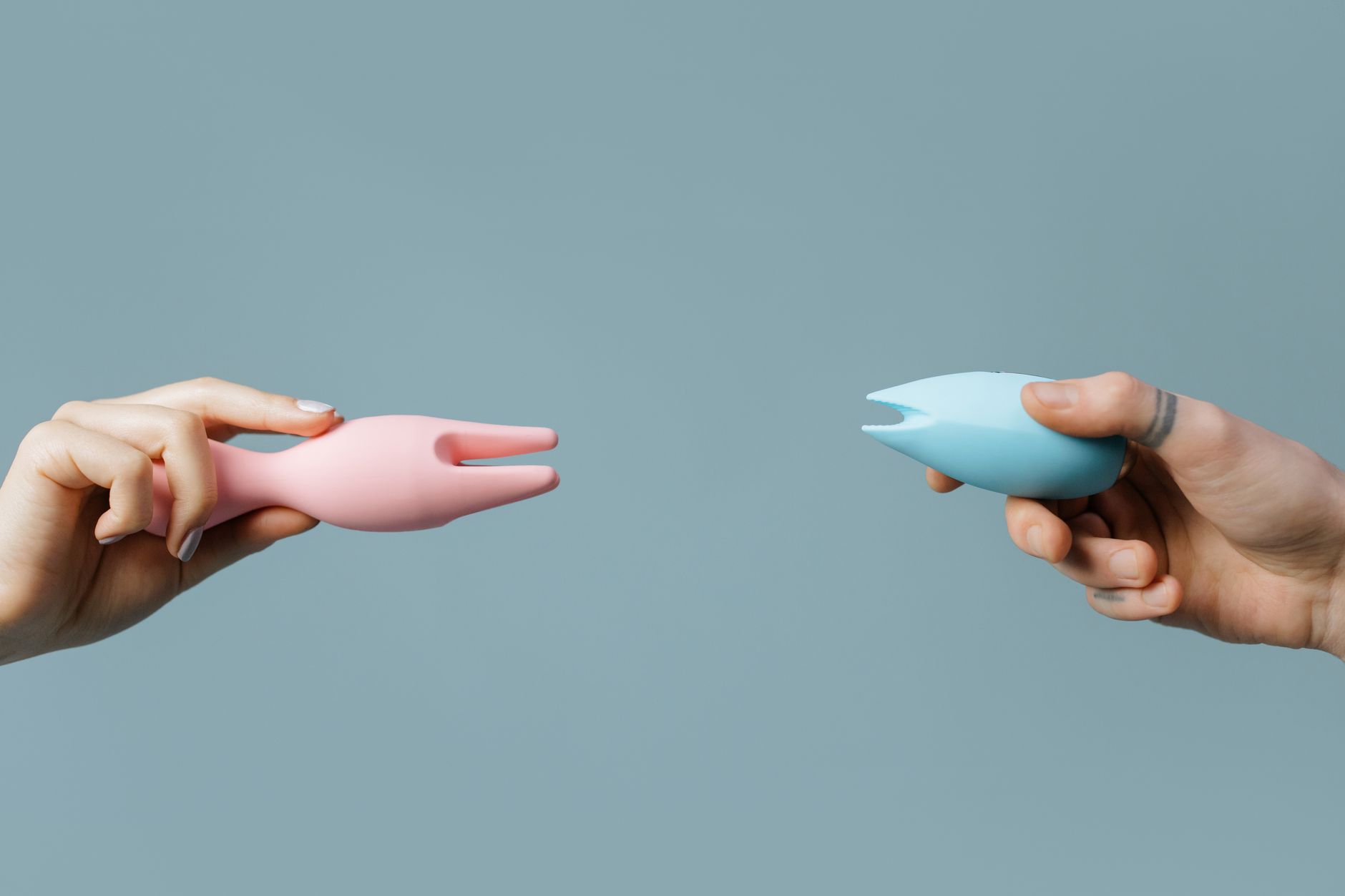
Here's the thing about sensitive vulvas
You've probably heard that vibrators are just supposed to work. Then you tried one and realized the buzz felt either jarringly intense or weirdly numb. Maybe it made you tender afterward. Or you flinched before it even made contact.
Sensitivity is real, and it's not a personal failure. Your vulva might be sensitive because of thin tissue, hormonal changes, past pain, dermatological conditions, or simply because your nerves are wired to respond quickly. Whatever the cause, the standard approach of "just use lower settings" doesn't always cut it.
That's where lemon clitoral vibrators work differently than anything else on the market. Instead of vibration, they use air-suction technology. No direct buzz. No friction overload. Just sustained gentle pressure and release cycles that feel more like massage than electric stimulation.
Why regular vibrators can feel painful or overwhelming
Most vibrators work through rapid oscillation. The motor creates buzzing motion against sensitive tissue. For some people, this feels amazing. For others, it's the sensation equivalent of someone tapping your shin repeatedly. The stimulation itself isn't bad, but the rhythm and intensity can overwhelm delicate nerve endings.
If your vulva is thin (which happens naturally with age, hormonal shifts, or conditions like lichen sclerosus), vibration can feel sharp or even bruising. If you're recovering from vaginismus, past pain, or trauma, the sensation might trigger a protective contraction. And if you have vulvodynia or generalized hypersensitivity, direct vibration can amplify pain signals instead of pleasure ones.
There's also the numbness problem. Some people find that after using traditional vibrators regularly, the tissue starts to adapt and demands higher intensity to feel anything. This is partly neuromuscular, partly psychological. Your body learns that buzz means stimulation coming, and over time, lighter touch stops registering.
How air-suction lemon vibrators feel different
Instead of vibration, lemon clitoral vibrators use air-pulse technology. Think of it less like a buzzer and more like gentle rhythmic suction. The device creates a seal around the clitoris, then pulses air in waves. No direct contact with a motor. No sustained friction.
This matters for sensitive tissue because:
1. It distributes pressure evenly. Suction spreads stimulation across a wider area rather than concentrating intensity on a single point. For thin or reactive tissue, this is gentler and less likely to cause inflammation.
2. The sensation is completely different neurologically. Your clitoral nerves respond to pressure changes differently than they respond to vibration. Many people with sensitivity to traditional vibrators find air-suction feels like a breath of relief, literally.
3. You can start absurdly gentle. With lemon vibrators, settings 1 and 2 are genuinely barely-there. Not just "lower vibration," but legitimately featherlight. This matters if you're rebuilding sensation or managing pain.
4. It doesn't create the same desensitization cycle. Because the stimulation pattern is so different from vibration, your nervous system doesn't adapt to it the same way.
Who benefits most from air-suction technology
If you have thin vulvar tissue, you already know that most vibrators feel like too much too fast. Air-suction lemon vibrators let you start at an intensity that actually feels pleasurable rather than punishing.
If you're managing vulvodynia or generalized vulvar pain, the gentleness of suction can be the difference between pleasure and exacerbation. You're not adding friction or sharp sensation. You're adding sustained pressure, which many people find soothing rather than aggravating.
If you're in recovery from vaginismus or past painful sex, your nervous system is probably still in protective mode. Traditional vibrators can sometimes feel too clinical or intense while you're rebuilding trust in your body. Air-suction feels warmer and less mechanical.
If you have lichen sclerosus, lichen planus, or other dermatological vulvar conditions, your tissue is already compromised. Vibration can intensify inflammation. Gentle suction doesn't.
And if you're simply someone whose nerves light up fast, who's never loved the buzz of traditional vibrators, who feels overstimulated easily, or who's never had an orgasm because everything feels like too much. Air-suction lemon vibrators are often the first device that actually feels right.
How to start using lemon vibrators with sensitive tissue
The first rule is patience. You're not trying to prove anything or push your sensitivity away. You're exploring what actually feels good.
Start with the lowest setting. Seriously. Don't skip ahead. Spend a full session (or three) getting used to how setting 1 feels. This isn't about building intensity. It's about teaching your nervous system that this is safe and pleasurable.
Warm up first. Spend 10-15 minutes on things that feel good but aren't the lemon vibrator itself. Touch, kissing, whatever your body craves. Arousal increases blood flow to your vulva and makes tissue more resilient and responsive.
Use water-based lubricant, even though suction works differently than friction. It helps the device create a better seal and reduces any micro-irritation. Honestly, it just feels nicer.
Position matters more with air-suction than with traditional vibrators. The seal needs to cover your clitoris fully. Experiment with slight angle adjustments. The right angle feels noticeably different than being slightly off target.
If you feel pain, stop immediately. Sensitivity is real, but pain is your body's stop signal. Pain during pleasure is not something you push through. It's something you listen to and adjust for next time.
The partner conversation when you have a sensitive vulva
If you're using a lemon clitoral vibrator with a partner, the shift in technology matters socially too. Some partners feel threatened by vibrators because they associate them with "needing more than they can provide." Air-suction is so different from vibration that it can reframe the whole dynamic.
Instead of "I need this toy because you're not enough," the conversation becomes "My body responds better to this type of stimulation." That's true for sensitive vulvas. You're not replacing your partner's touch. You're adding a tool that actually works for your nervous system.
Many couples find that exploring lemon vibrators together becomes a reconnection moment, especially if sensitivity has been a source of frustration or avoidance. Slowing down, being curious about what actually feels good, trying different settings together. That's intimate work.
When to see a professional
If your vulva suddenly becomes sensitive when it wasn't before, or if sensitivity is paired with pain, itching, or unusual discharge, that's a sign to check in with a gynecologist. Sometimes sensitivity signals something treatable. Vulvodynia, lichen sclerosus, contact dermatitis, or hormonal changes all present as sensitivity first.
If you've had past pain or trauma around sex and you're not sure where your sensitivity is coming from neurologically versus emotionally, talking to a sex-positive therapist can help you untangle those threads. Sensitivity often has both a physical and psychological component, and addressing both matters.
For some people, a combination approach works best: a lemon clitoral vibrator for physical pleasure, pelvic floor physical therapy to release tension, and therapy work to process any past pain. You don't have to choose. Your body deserves support on all fronts.
The long game with sensitive vulvas
Using a lemon clitoral vibrator isn't about forcing yourself to feel more or be more sexual. It's about finding a tool that respects how your body actually works instead of fighting against it.
Many people find that consistent, gentle pleasure with an air-suction device actually increases sensation over time. Not because you're pushing through, but because your nervous system learns that stimulation feels safe. Arousal deepens. Connection strengthens. What felt numb or overwhelming starts to feel nuanced.
Your sensitivity isn't a limitation. It's information about what your body needs. A lemon vibrator that works with that sensitivity instead of against it can be the difference between sex that feels like obligation and sex that feels like relief.
People also ask
Can I use a lemon clitoral vibrator if I have vulvodynia?
Many people with vulvodynia find air-suction lemon vibrators gentler than traditional vibrators because the stimulation is distributed and sustained rather than vibrational. That said, vulvodynia varies widely. Start on the lowest setting, use plenty of lube, and stop immediately if pain increases. If you're managing vulvodynia, working with a pelvic floor physical therapist alongside toy exploration can help. Not everyone with vulvodynia can use toys comfortably, and that's completely valid. Your pleasure doesn't require a device.
Does using a lemon vibrator on sensitive tissue cause inflammation?
Not inherently, but friction and pressure can trigger inflammation if your tissue is already compromised or reactive. Air-suction lemon vibrators don't create the same friction as traditional vibrators. Start gently, use lube, and keep sessions short while you're still learning what your body tolerates. If you notice increased pain, itching, or swelling after use, that's your signal to take a break and possibly check in with a healthcare provider.
How is a lemon clitoral vibrator different from other air-suction vibrators?
Lemon vibrators use air-pulse technology specifically designed for clitoral stimulation. The shape, suction intensity, and pattern settings are optimized for external pleasure. Some air-suction devices are marketed as more clinical or medical. Lemon vibrators are designed with pleasure as the primary goal, which changes the feel, the materials, and the overall approach. The result is that many people find them more intuitive and enjoyable than generic air-suction devices.
If I have thin vulvar tissue, should I always use the lowest setting?
Not necessarily always, but yes, start there. As your body gets used to the device and you learn what feels genuinely good versus what feels like you're "supposed" to like, you can experiment with higher settings. Some people with thin tissue find that certain mid-range settings actually feel better than the lowest, because the pressure is more intentional. The key is that you're choosing based on what feels good to you, not what you think you should be able to tolerate.
Can I use a lemon vibrator if I've never had an orgasm?
Yes, and for some people with sensitivity issues, an air-suction lemon vibrator is the first device that makes orgasm possible. The gentleness and distributed pressure can bypass the intensity barrier that stops some people from reaching climax with traditional toys. That said, not every orgasm requires a toy. If you've never orgasmed, it might also be worth exploring what's happening neurologically, hormonally, or psychologically. Sometimes a vibrator helps. Sometimes the real work is elsewhere.
Is a lemon vibrator safe if I have lichen sclerosus or other dermatological conditions?
Gentle air-suction is typically safer than traditional vibrators for compromised tissue, but it depends on your specific condition and where your lesions are. Some people with lichen sclerosus use lemon vibrators without issue. Others find that any stimulation triggers flares. This is a great conversation to have with a dermatologist or vulvologist who knows your condition. They can give you specific guidance for your situation.
Pleasure is personal
Sensitive vulvas don't need fixing. They need tools and approaches designed around how they actually work. If you've assumed vibrators just weren't for you because traditional ones felt terrible, a lemon clitoral vibrator might change that entirely.
Your pleasure matters, even if it requires a different path than the standard. Especially then. Start slow, listen to your body, and give yourself permission to enjoy what actually feels good.
If you want to dive deeper into pleasure practices that work with sensitivity, check out our guide on rebuilding pleasure after numbness or explore how pelvic floor tension affects sensation. You can also reach out to our team if you have questions about which device might work best for your specific situation.