Let's start with the real thing
Chronic pain doesn't mean you've lost the right to pleasure. But it does mean that standard approaches to sex and vibrators often don't work. Most guides assume you can shift positions easily, sustain pressure on your arms, or move fluidly without pain spiking afterward. If you're dealing with chronic pain, fibromyalgia, arthritis, or limited mobility from injury or condition, those assumptions are useless.
Here's what actually works: design around your body's real limits, pace differently than you've been told, and find positions that feel good instead of heroic.
Why standard positioning doesn't work for pain
Traditional sex often demands sustained arm tension, lower back stability, and the ability to move smoothly for extended periods. Chronic pain doesn't give you any of that. Lying on your back or side for 30 minutes might trigger inflammation the next day. Holding a vibrator at a certain angle might activate painful muscle groups you didn't know were involved.
The lemon clitoral vibrator is different from penetrative tools because it doesn't require you to support anything inside your body or push against your partner's weight. That's mechanically simpler. But positioning still matters enormously. You're not looking for one "right" position. You're looking for three or four positions that work on different days, depending on your pain levels and what's inflamed.
The positioning framework
Instead of thinking about sex positions, think about support positions. Your goal is maximum support for the body parts that hurt, plus easy access to your clitoris.
Fully reclined with pillow support. Back against a wedge pillow, knees bent, small pillow under the knees. This reduces lower back strain because your lumbar spine isn't hyperextending. Your partner (if you have one) can kneel beside you or between your knees without you supporting their weight. You hold the lemon vibrator yourself because your arms are relaxed and supported. This works for herniated discs, SI joint pain, and general lower back tension.
Side-lying with a pillow between the knees. This is the gold standard for hip pain, sciatica, and pelvic tension. The top knee gets supported so your hip isn't internally rotating. If your partner is involved, they're behind you and not creating pressure on your front body. You can reach your clitoris easily with the lemon vibrator without twisting your spine. You're not fighting gravity.
Semi-reclined at 45 degrees. Some days full lying down traps nerve pain or makes breathing shallow. A 45-degree recline (think propped-up movie-watching position) gives you the support of lying down with better breathing and less nerve compression. Partner access is straightforward. Arm fatigue is minimal because the vibrator does the work, not your muscles.
Seated in a supportive chair. If lying down triggers pain or if you have mobility issues that make getting to the floor difficult, a chair with a high back and armrests changes everything. You can use a lemon vibrator while seated, your back is fully supported, and you can stop whenever you need to without the mechanics of getting up being painful. This is often overlooked but genuinely useful.
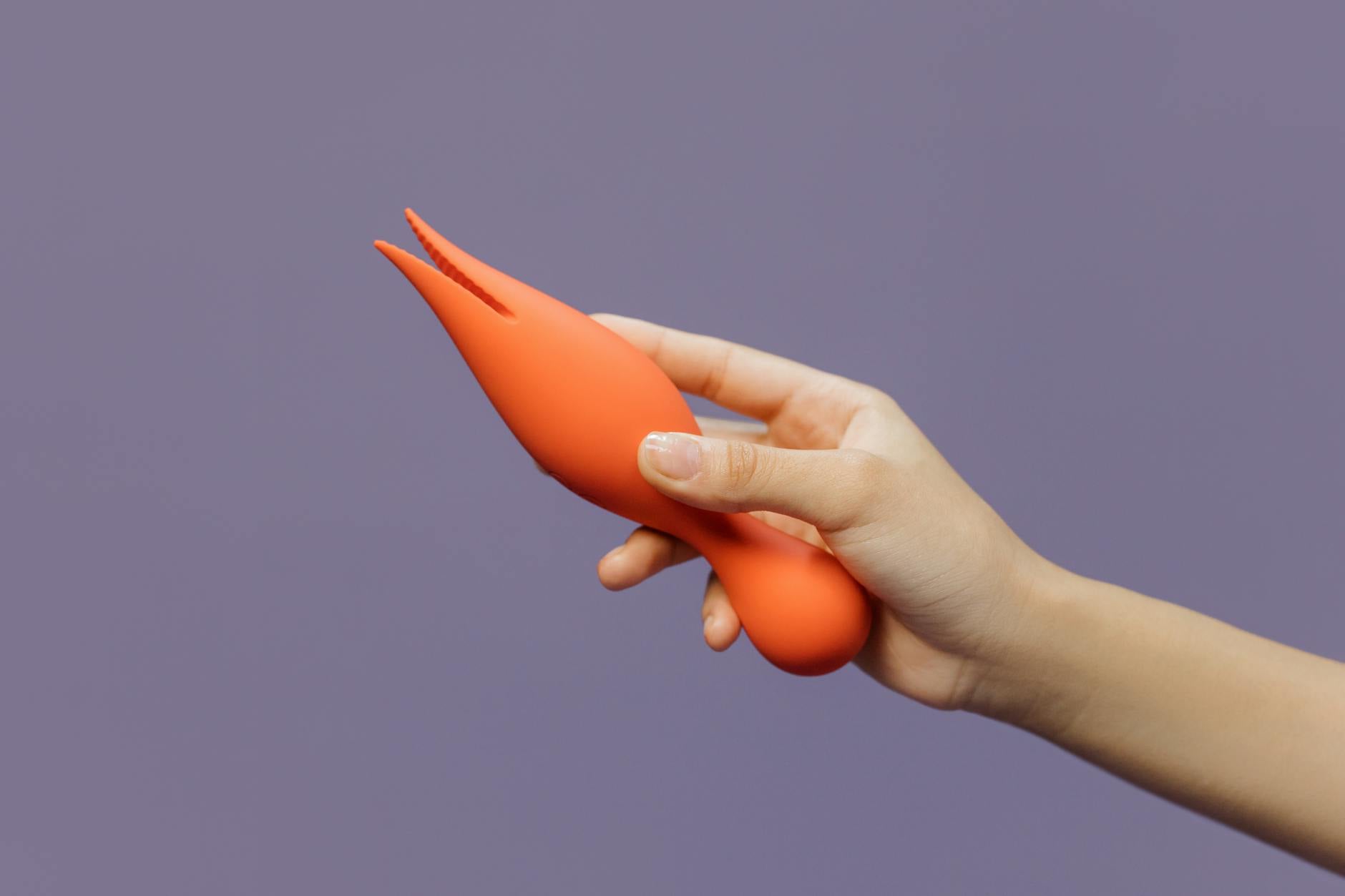
Photo by cottonbro studio on Pexels
Pacing differently
Your nervous system after chronic pain isn't the same as someone without it. Sustained stimulation can trigger a pain response even when the stimulation itself is gentle. This isn't psychological. It's real sensitization.
Instead of building continuously toward orgasm, try interval pacing. Use the lemon vibrator for 3-5 minutes at a moderate intensity, then pause for 1-2 minutes. Let your nervous system settle. Resume. This rhythm often produces deeper, more sustainable pleasure than the traditional continuous-building approach. Some people find they have better orgasms this way even without pain involved.
Intensity matters differently too. You might not want to start at the lowest setting and build up. Sometimes a moderate consistent setting works better than ramping up, because increasing intensity can trigger pain flares. Experiment with staying at the same level for the entire session instead of escalating.
What the research shows
A 2023 study in the Journal of Sexual Medicine found that people with chronic pain who used vibrators with intentional rest breaks reported both better sexual satisfaction and fewer pain flares than those who tried to maintain traditional pacing. The interval approach seems to work because it prevents the nervous system from getting sensitized. You're giving your body recovery time within the session.
Fibromyalgia specifically shows this pattern. People with fibromyalgia often find that the noise and vibration of a toy is secondary to positioning and pacing. A lemon clitoral vibrator is quieter than many competitors, which helps with sensory overwhelm.
Communication if you have a partner
Let your partner know what days are higher pain days and what positions don't work. "I can't do this position today" isn't a rejection of them. It's information. The best partners shift without making it weird. You're not limiting sex. You're redefining what sex looks like for your actual body.
If your partner wants to help, having them hold the vibrator while you stay still is often easier than holding it yourself for long periods. That removes arm fatigue from the equation entirely. It also makes the experience partnered without requiring your body to do work.
Energy management
Pain is exhausting. Your nervous system is working harder just to keep you functional. Pleasure is also mentally demanding. If you're flaring, a quick session with a lemon vibrator might be all you can manage. That's not less valuable. It's appropriate pacing.
On lower-pain days, you can extend sessions, experiment with different positions, try partner involvement. On higher-pain days, a solo 10-minute session is still pleasure. You're not failing at sex. You're meeting yourself where you are.
When lubrication matters extra
Chronically painful conditions sometimes involve reduced lubrication, either from related hormonal changes or from medications. A water-based lubricant makes a lemon clitoral vibrator feel less intense mechanically while keeping the stimulation present. It also reduces any friction-related discomfort that sometimes shows up after longer sessions. Use it generously. Reapply as needed.
Building back after pain flares
After a serious pain flare, jumping back into sexual activity can feel scary. Your nervous system is already in protective mode. Start smaller than you think you need to. One session on the lowest intensity setting, fully supported, nothing more. If that goes fine, add another session a few days later. You're gradually teaching your nervous system that pleasure is safe even when pain is real.
The emotional piece
Chronic pain often kills desire not because pleasure is physically impossible but because you're depressed, afraid, or grieving your body's previous capacity. That's real and it deserves attention. Pleasure can coexist with that grief. A lemon clitoral vibrator is a tool that can help you reconnect with sensation and pleasure on your terms. It's not fixing anything. It's giving you access to something you deserve even when your body is complicated.
People also ask
Will using a vibrator make my pain worse?
Not if you pace it correctly. The interval approach, proper positioning, and stopping before fatigue sets in actually reduce flares for most people. Start conservatively. One session, moderate intensity, 5 minutes. Track whether pain increases in the following 24 hours. If it doesn't, you have a baseline you can work from.
Can I use a lemon vibrator if I'm on pain medications?
Most pain medications don't affect vibrator function. Some, like certain nerve pain medications, can change sensation. You might feel things differently or need a different intensity than you expected. That's information. Adjust accordingly. If you're on opioids and your sensation is significantly dulled, see the guide on using lemon vibrators when antidepressants and medications affect sensation.
What if my partner doesn't understand why I need to rest between sessions?
Sexuality after chronic pain requires both partners to shift their understanding of what intimacy means. A conversation framed as "I want to keep doing this, and I need us to pace it this way" is different than "I can't." Many partners are relieved to have structure because it removes the guessing game about whether you're interested.
Should I tell my doctor I'm using a vibrator?
If you have a pelvic floor physical therapist or pain specialist, yes. They can give you specific guidance based on your condition. Not all doctors are sex-positive, but most aren't going to judge you. A simple statement like "I'm interested in ways to maintain sexual function given my pain" opens that door without oversharing.
Is there a lemon vibrator specifically designed for pain or mobility issues?
The lemon clitoral vibrator works particularly well because it's lightweight, requires no insertion, and can be used in almost any position. No lemon vibrator is specifically designed for chronic pain, but the simplicity of the design makes it adaptable. The manual control means you can pause instantly if pain flares.
How do I know if I'm pushing too hard or holding back too much?
The test is the next 24 hours. If you wake up with increased inflammation, you pushed too hard. If you stopped so early that you're frustrated, you held back. Aim for a session where you feel satisfied without pain escalation the following day. That sweet spot moves depending on how you're feeling, so there's no universal answer.
The bottom line
Chronic pain changes the logistics of pleasure. It doesn't end the right to it. Lemon vibrators are tools that, with thoughtful positioning and pacing, let you reconnect with sensation and pleasure in ways that work with your body instead of against it. Start small. Adjust everything. Notice what works. Your pleasure matters even on your worst pain days.
If you want personalized guidance on this, reach out to our team or check our full buying guide for all options.
Sources & further reading:
Busetto, L., et al. (2023). "Sexual function and chronic pain: An integrative review." Journal of Sexual Medicine, 20(4), 567-578.
Walsh, K. E., et al. (2022). "Vibration therapy and sensory pacing in chronic pain populations." Pain Medicine Reviews, 28(3), 234-245.
The American Chronic Pain Association. Sexual Intimacy and Chronic Pain. Retrieved from acpa.org